Sealants, Coatings and Waterproofing
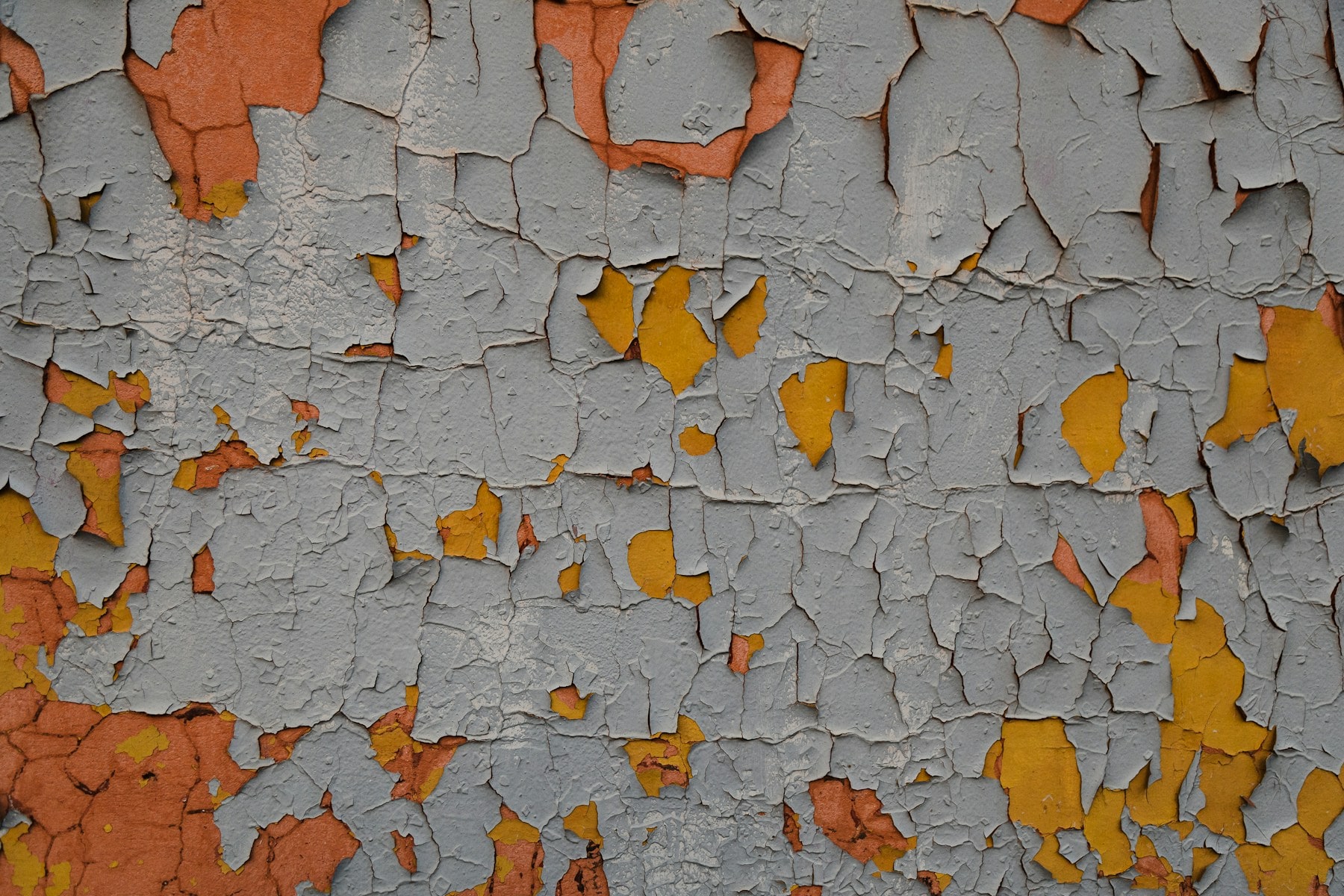
Illustrative reference photograph: Weathered exterior coating with exposed layers and peeling paint. Not an LSP project
Sealants, coatings and waterproofing systems protect buildings in different ways. A joint sealant accommodates movement at a defined joint; a coating changes the exposed surface; membranes and flashings manage water within an assembly. Their effectiveness depends on substrate condition, preparation, continuity and transitions. Applying a new surface treatment does not necessarily resolve water entering elsewhere or correct an underlying construction problem.
Preservation work must consider how a proposed product interacts with historic materials and their ability to dry. This guide connects visible coating and joint conditions with material compatibility, moisture paths and the evidence needed before an intervention is chosen. It also examines removal, preparation, access, weather restrictions, curing, renewal cycles and lifecycle expenditure, which can matter more to the owner than the product price alone.
01 Materials Science
Material and Construction
Sealants, coatings, membranes and flashing perform different functions. Their effectiveness depends on the substrate, preparation, joints and transitions. A surface-applied treatment should not be assumed to replace drainage or repair of an underlying defect.
Properties and Behavior
Adhesion, movement accommodation and moisture transmission differ between systems. A treatment that limits surface wetting can also change drying behavior. Compatibility must be considered with the historic substrate and adjacent products.
02 Conditions and Investigation
Common Conditions
- Peeling, blistering or exposed coating layers
- Separated joint edges or splits in sealant
- Staining, dampness or reported leakage at transitions
Deterioration Mechanisms
Possible explanations include inadequate preparation, movement, moisture behind a treatment and incompatible layers. Covering visible symptoms without investigating water paths can leave the original problem unresolved.
Investigation and Testing
Document substrate type, existing layers, joint configuration and water-entry history. Specialists may require adhesion trials, samples, moisture observations and targeted water testing. Older coatings need hazard review before removal or disturbance.
03 Preservation Treatments and Interventions
Preservation and Repair Considerations
Evaluate local joint renewal, compatible recoating and wider system work against the evidence. Trials should address preparation, appearance and substrate effects. NPS guidance cautions against treating water-repellent or impermeable coatings as a universal answer to masonry moisture problems.
The applicable preservation objective concerns the property as a whole. The following NPS treatment names are reference headings, not selectable options or automatic recommendations for this material.
- Preservation
- Retain existing fabric through care and limited repair.
- Rehabilitation
- Accommodate compatible use while retaining historic character.
- Restoration
- Depict a documented period, rather than every phase.
- Reconstruction
- Recreate a non-surviving resource from sufficient evidence.
NPS distinguishes the four treatment standards under 36 CFR Part 68, regulatory for applicable Historic Preservation Fund grant-assisted projects, from the Standards for Rehabilitation under 36 CFR Part 67 used for federal historic preservation tax incentives. The accompanying Guidelines are advisory. Tax-credit rehabilitation is not necessarily restoration to a single historical date. NPS treatment framework; tax-credit Rehabilitation Standards.
04 Capital Planning and Owner Decisions
Cost, Procurement and Lifecycle Economics
These are project-budget questions, not price quotations, predicted service lives or a recommendation to select the lowest initial cost. Quantities, unit rates and project assumptions must come from reliable, current project information.
- Initial capital expenditure
- Allow for repeated access, weather windows, substrate drying, protection and phased work around occupied areas. Temporary weatherproofing needs a defined responsibility. Include investigation, mockups, labor, materials, mobilization and protection before comparing totals.
- Repair versus replacement
- Use the same scope boundaries when comparing alternatives. Separate retained, repaired and replaced quantities, making good and disposal. A low unit rate can conceal different inclusions.
- Schedule and procurement
- Compare preparation, removal, primer, product quantities, joint dimensions, transition work, sample areas and curing restrictions. Product cost alone does not represent installed cost.
- Financial risk
- Unknown layers, damp substrates, concealed transitions and unsuitable weather can alter scope and sequence. Explicit allowances are more useful than an unexplained single renewal price.
- Lifecycle expenditure
- Compare expected inspection and renewal needs using supported product and project information. Include removal and preparation at the next cycle, not only the first application. State the analysis period and maintenance assumptions. Any discounted comparison needs disclosed client-approved rates and consistent treatment of inflation.
- Preservation economics
- Consider fabric retention, required approvals, sample review and documentation. Research potentially relevant incentives separately; eligibility, tax effects and funding are not assumed in the base budget.
- Owner decision
- Request a supported scope, measured quantities, current quotations, access plan, schedule, contingency basis and future maintenance assumptions. Compare uncertainty and historic-material retention as well as the initial expenditure.
Comparison of Possible Interventions
Discuss only alternatives supported by the investigation and preservation objective. Some options may be inappropriate or require prior approval.
| Potential intervention | Initial cost considerations | Long-term considerations |
|---|---|---|
| Maintenance and conservation | Access, specialist labor, trials and limited treatments | Recurring inspection, maintenance and access; effectiveness depends on the actual conditions |
| Localized repair | Preparation, compatible materials, sample work and making good | Repair compatibility, possible recurrence and future maintenance |
| Selective replacement | Removal, matching or fabrication, attachment requirements and approvals | Performance assumptions, adjacent retained materials and future repairability |
| More extensive replacement | Wider removal, fabrication quantities, access, temporary work and approvals | Historic fabric loss, replacement-system maintenance and supported renewal assumptions |